

Walls
I am often asked what called me to this work, what brought me here. The truth is, I don’t really have a clean answer.
This was never a goal. Never a plan. I didn’t set out to work in end-of-life care. I landed here while caring for a friend who was dying, at a time when I felt lost in ways I didn’t yet have language for. It was unfamiliar, uncomfortable, and far outside anything I imagined for myself. And maybe that was the best part, it challenged me in a way I felt compelled to take on, even though the journey here was hard. All of it was hard. Nursing school was hard. Life was hard. Nothing about this path felt easy or obvious.
Some of us are drawn to this work not because we were lonely, but because we were on our own.
I didn’t grow up with strong role models or a solid family foundation. There wasn’t anyone consistently looking out for me, guiding me, or setting boundaries meant to protect me. I learned early how to accept things as they were, how I was treated, the situations I found myself in, and the choices I made, because there was no one saying, “this isn’t okay,” or “this will hurt you,” or “you deserve more.” I learned how to protect myself by adapting. And part of that meant building walls.
My sister Laura was the exception. She was more of a mother to me than anyone else. She saw me. She loved me. With her, I felt safe. She was the voice I trusted, the person I could lean into, the one place where I felt held. And when she died, it didn’t just shape me, it broke me.
Her death severed the deepest sense of safety I had ever known. I lost the one person who felt like home, and in that loss, I felt more alone in my life than I ever had before. The walls didn’t come down then, they got thicker, and higher. I moved through the world fiercely and independently, sometimes trusting no one, sometimes trusting too easily, because I had never been taught what healthy protection truly looked like.
I had just started my first nursing job when she was dying, I wasn’t at her bedside. I asked her if I should come, and she told me no, that I was exactly where I needed to be. Even in her final moments, she was supporting me, and carrying me forward.
My walls served a purpose. They helped me survive.
Until I realized I no longer needed them.
The first place those walls started to come down, was at the bedside of someone who was dying. Walking into their space, and into their vulnerability, fears, and uncertainty, I felt something shift. Sitting with them, I realized I had something of value to offer. Not because I was whole or healed, but because I could be present, and because I could stay.
At first, I thought my role was to earn their trust. What I didn’t realize was that trust was being built in both directions. As others allowed themselves to be vulnerable with me, they taught me how to accept my own vulnerability.
Caregiving, at its core, is a place where walls come down. And as I encouraged others to feel safe, to open up, and to be held in their most tender moments, I chose not to rebuild my own walls.
We don’t all come to this work from wholeness. I would argue that most of us don’t. Beneath the roles we play is a history that shaped us, losses that broke us open, wounds that taught us how to see, how to listen, and how to care.
I didn’t come to this work because I had everything figured out.
I came because here, something in me finally made sense.
And maybe that’s true for you, too.
If so, here’s what I know now: my history is not a flaw. My tenderness is not weakness. Even the darkest places can hold beauty. My sister’s love is woven through everything I do. I didn’t lose her voice; I am carrying it forward. This work has taught me that. I truly believe it is why I landed here.
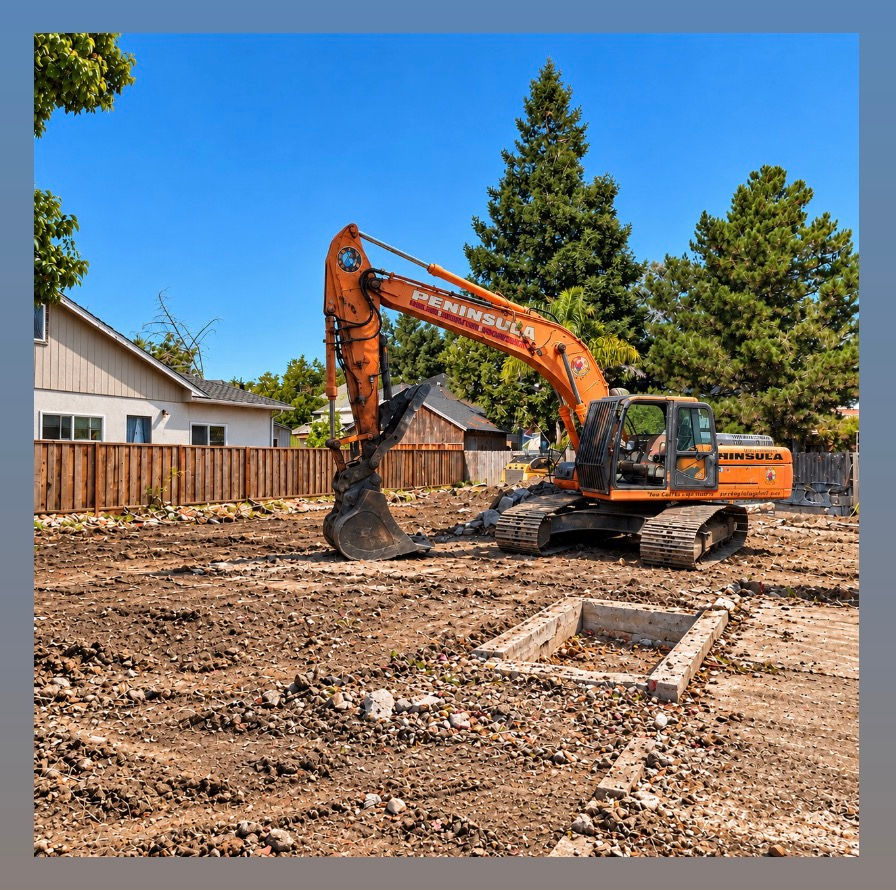
The walls are still there. They are not as high as they once were, not built to keep the world out anymore. At their base, a garden has grown, soft, living proof of everything that was allowed to take root once the light could reach it. I no longer need the walls the way I did before, but I like knowing their foundation remains. Not as protection, but as a reminder that I am strong enough now to stand on my own.
xo
Gabby



Comments